

The art of hedge trimming - what every garden owner should know
For many people, the garden is an island of tranquillity, a place to relax, a place where the closeness of nature is recharging. But for a garden to truly exude this tranquillity, it needs regular maintenance - especially if it includes a hedge.
A hedge trimming not just a routine gardening job, but a real shaping: giving form, thinning, directing - while supporting the health of the plant. In this post, we'll show you how to do it well, what to look out for, what the most common mistakes are, and how you can even enjoy doing it.
Why is regular hedge trimming important?
Many people only reach for their shears or hedge trimmers when the hedge has become noticeably "out of control": overhanging the street, blocking the view from the window or simply giving a bushy, untidy impression. At this point, pruning is more like firefighting than tending - and often too late for a perfect result.
A hedge trimming is not just about aesthetics. In fact, regular, professional trimming is primarily a matter of long-term plant health and vigour is essential. A well-maintained hedge is not only beautiful, it's also more resistant, tidier and much easier to manage. Let's see why!
1. Stimulates bush growth - makes your hedge dense and compact
Hedgerows have a natural tendency to grow upwards - often reaching towards the light, thinning and tapering. Regular pruning, on the other hand stimulates lateral shoot formation, so the plant is not only taller, but fuller and more even will be. And a dense, compact hedge is not only more beautiful, but provides better shading, filters noise and acts as a more effective space barrier also works.
2. Prevents flaking - especially on the lower parts
One of the most common problems is thick on top, bald on the bottom hedge. The reason is that the upper part casts shade on the lower shoots, which then suffer from a lack of light and die back. Properly shaped, wider at the bottom, narrower at the top hedge shape and regular pruning ensure that the whole plant gets light - so the underside stays green and healthy.
3. Helps keep growth under control - fewer constraints
Overgrown, neglected hedges can often only be "tamed" by severe, drastic cuts - which often cause permanent damage, especially to evergreens. Regular pruning, on the other hand, allows you to shaping the plant step by step, without cutting back to the old parts that are unable to sprout.
4. Promotes good ventilation and reduces the risk of disease
The inner parts of a too dense, overgrown hedge are often poorly ventilated, humid, shady - and this creates an ideal environment for fungal and bacterial diseases. A well-thinned hedge with an airy structure, on the other hand, remains much healthier: shoots dry more quickly after rain, reduce the chance of pathogens and pests multiplying.
+1: Regular mowing gives shape and character to the garden
Last but not least: a well-maintained hedge in the garden visual framework. It sets the mood for the whole space, guides the eye and adds style - whether it's a clean, modern look or a more natural, romantic garden scene. A well-manicured hedge always creates a tidy effect, not least also increases the value of the property.
What hedge do you have? It matters how you mow!
Before you grab your pruning shears, it's worth taking a look, what type of hedge growing in your garden. Because not all plants tolerate pruning in the same way: some love frequent pruning, while others can suffer from excessive intervention. A hedge trimming techniques and frequency varies considerably depending on whether it is an evergreen or deciduous plant, and of course the purpose of the hedge - screening, noise control, ornamental or space delimitation. Let's look at the most common types of hedges and their characteristics:
🌿 Ice cream - the hardy favourite
A ice cream is one of the most popular hedge plants in our country, and for good reason. It's fast growing, tolerates pruning well and is a rewarding choice for beginner gardeners. Can be cut up to 2-3 times a year, especially during the growing season (spring and early summer). The more often you mow, the denser, more compact will be the hedge - making it ideal for those who want to create an enclosed, opaque fence.
Tip: In the spring, you can cut back even more vigorously to produce new, vigorous shoots. In summer, however, a shaping cut is sufficient.
🌲 Tuja (Leyland, Emerald) - the sensitive evergreen
A tuja, in particular the Leyland cyprus or the Emerald tuja, is also a common choice as it grows quickly and stays green all year round. However, many garden owners are unaware that these evergreens do not tolerate too strong a fightback.
When and how to shear? Early spring or early summer is the best time to do the shaping, before the plant is fully established. Adjust only the green parts - in small increments, in several steps if necessary. Regular, gentle pruning is much better than infrequent but drastic intervention.
🌳 Puszpáng - malleable, but attackable
A kissing pan (bucus) is a classic, dense-leaved plant that makes a great low hedges or even ornamental shapes can also be designed. One of its biggest advantages is that tolerates regular shearing well, in fact - it requires it if you want to keep a regular shape.
In recent years, however, it has come under serious threat from kissing mothwhich can destroy the plant in a matter of weeks. The good news is that regular shearing help detect and remove caterpillars or eggs in time, or prevents overly dense, difficult to see foliagewhere pests could hide.
Tip: We always combine shearing with a visual inspection - look closely at the leaves, looking for silky tissue or tiny chew marks.
🌿 Dandelion - the ornate but stubborn beauty
A laurelmeggy a spectacular, elegant-looking evergreen shrub with large, glossy leaves that give the garden a special character. It grows more slowly than, for example, mistletoe or tuya, but requires less maintenance. However, shearing is not as easy as you might think.
The bay leaf thick, waxy leaves are prone to deterioration, especially if cut with blunt or inappropriate tools. The traditional hedge trimmer can tear the edges of leaves, which can result in brown discolouration and a more unsightly appearance.
What can you do about it?
Use special sharpened scissors or hand pruners if you want a really nice, clean cut. The laurel root should be mow once, maximum twice a year, rather in spring and early summer.
Ideal times for hedge trimming
A timing of hedge trimming is as important as the technique itself. A well-timed cut helps the plant to regenerate, improves its shape and results in a healthier, more beautiful hedge in the long term. Throughout the year can be used for a variety of purposes, depending on what we want to achieve.
🌱 Early spring (March-April): time for basic pruning
Early spring is one of the most important times for hedges. Mowing before the start of the growing season gives the plant its basic shape, and removes damaged shoots that have withered over the winter. As the foliage is even thinner, a clear structure, so you can make a more precise, thoughtful pruning.
🌿 Early summer (June): shaping trim
In spring, most hedges start to grow intensively. By June, it often becomes stunted and loses its shape. It is therefore worth using a lighter styling to be carried out - to cut back the shoots that have sprouted, to bring the plant back to its original shape. With this control the growth of the hedge, and avoid excessive shading or asymmetric shapes.
🍂 End of summer (August-September): autumn adjustment
The last mowing of the season is more of a director's cut, which helps the plant prepare for winter. It is important at this time to not to cut too deep, and do not stimulate the growth of new shoots, as they will not strengthen before the frosts. The aim is rather to keep them finely aligned and tidy.
☀️ Tip - protect your plant from the summer heat!
Whenever you mow, avoid the the scorching sun and the heat! Fresh cuts can easily scorch and brown, especially on more sensitive species. A morning or late afternoon hours are more ideal - the plant recovers more quickly and the pruning will be less noticeable.
Tools you'll need
Just as no good chef works with a dull knife, so in the garden it's essential to the right tool. A hedge trimming tools play a key role in making the job quick, efficient and gentle on the plant. Poorly selected, blunt or inappropriate tools can damage shoots, which makes it easier for pathogens to enter and slower for the hedge to regenerate. Let's see what you need for a professional but do-it-at-home hedge trimming:
✂️ Manual hedge trimmer shears - the master of precision
For shaping smaller, younger hedges or for fine, detailed work, the hand scissors is the best choice. It's easy to control and helps create regular lines or even more ornate shapes. Ideal for brushwood or laurel where a clean cut is particularly important.
🔌 Electric or battery hedge trimmer - if you want a fast and smooth job
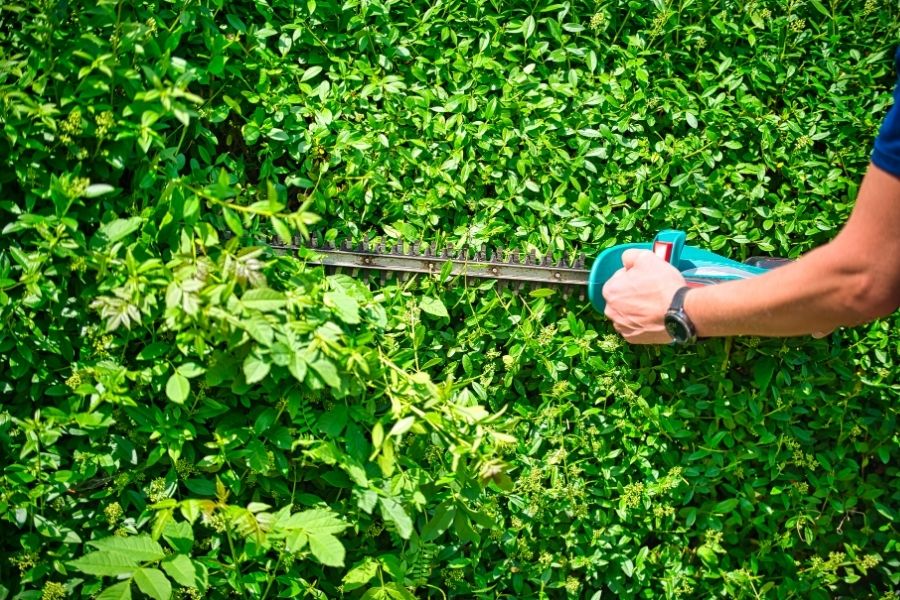
When you're dealing with longer, taller, denser hedges, it's a good idea to automate the process. A motor hedge trimmer greatly speeds up your work and ensures a smooth cut. Battery-powered models also light and mobile, no need to bother with an extension cord or power source.
Watch the length and sharpness of the blades - the longer the blade, the fewer strokes you make and the nicer the cut.
🪜 Ladder and safety equipment - if you're moving up a level
Many people forget it, but trimming a tall hedge is not a game. An stable ladder, equipped with anti-slip devices, are essential for safe working. If you often work at height, you should a telescopic handled machine which allows you to do most of the cutting from the ground.
🧤 Goggles and gloves - the little things that can prevent big trouble
Not only recommended for professional gardeners: the safety glasses protects you from falling branches, leaves or chips, from gloves and protects your hands from prickly branches, sharp leaves and blisters caused by tool handles.
🛠️ Tip - sharp tool = healthy hedge
Sharpen your blades at least once a year - whether you use a manual or mechanical hedge trimmer. From sharp blade for clean, smooth cuts, does not "tear" or damage the plant, so it recovers faster and better. This is particularly important for thicker, woody parts, where damage can be irreversible.
The right technique - to get a nice, even hedge
A hedge trimming techniques is as important as when and what we work with. Many people think it's enough to simply 'cut the top off' and you've got a tidy garden - but in reality, this approach is a long-term solution. can damage the plant, and the results will not be spectacular. To make the hedge even, healthy and shapely it's worth following a few tried and tested principles.
🔽 Always work from the bottom up - that's how you get a balanced cut
Start work on the lower part of hedge row, and gradually work your way up. This technique is not only more ergonomic, but also helps you to see through the entire cutting surface, and don't leave out uneven patches. When trimming from the top down, it's easy to "cut" yourself off from the view and more difficult to correct small mistakes.
🔺 The sides of the hedge should be slightly sloping inwards - also important for light
This is one of the most often forgotten, yet most important rules. A classic trapezoidal shape, i.e. the slightly tapering upwards ensures that sunlight also reach the lower parts. If the top is wider than the bottom, the lower branches will soon start to bald, diebecause they do not get enough light. Over time, such a hedge will become badly overgrown - which is much harder to remedy than to prevent.
📏 Use a guide line or step - the secret to a precise, straight shape
You don't have to create a masterpiece from a yardstick. Even professional gardeners often work with a stretched cord or straight bar - especially for longer hedges. This is particularly useful when you want a symmetrical shape, and precision is important. It is much easier to follow the guide line an even, harmonious hedge than if we were to mow purely "by feel".
The most common mistakes to avoid when trimming hedges
A mistakes in hedge trimming can easily happen, especially if you work routinely or "by feel". But these mistakes can lead not only to aesthetic problems, but also to the long-term weakening of the plant. Here are the three most common mistakes - and what you can do about them:
1. Overcutting or undercutting
The seldom-trimmed hedge falls apart, loses its coherent form, and grows too tall and wide. Too frequent trimming, on the other hand exhausts the plant, it cannot develop properly and becomes more prone to diseases.
🔁 Tip: Keep the hedge in balance - 1-3 times a year is plenty, depending on the needs of the species.
2. Bad timing
A cutting in hot sunlight easily burns fresh pruning surfaces, which can cause shoots to may turn brown or dry out. And late autumn pruning can start new shoots, which they can no longer ripen before the frost, and they die.
📅 Tip: The safest times are early spring and early summer.
3. Use of blunt instruments
The lifeless blades leave irregular, torn cuts, which is not only ugly, but also makes the plant more susceptible to infection. A job done with blunt scissors can literally backfire.
🔧 Tip: Sharpen your blades at least once a year and clean them after each use.
Why choose Green Garden Budapest for hedge trimming?
A Green Garden Budapest garden construction and maintenance services to help you keep your garden in perfect condition. Our professional team Budapest and in Pest county provides expert hedge trimming to ensure your hedges are not only beautiful, but healthy and shapely for the long term.
Don't leave hedges untidy! Let us take care of hedge trimming and garden maintenance and enjoy the green oasis we'll create in your garden! The best garden construction and garden maintenance contact us today for solutions!